01
Participation beyond meetings
In-person meetings exclude residents with limited time or mobility. The proposal brings voting and consultations to the phone and explores SMS as a complementary participation channel.
A mobile platform concept that helps rural communities take part in decisions, share resources and follow collective agreements.
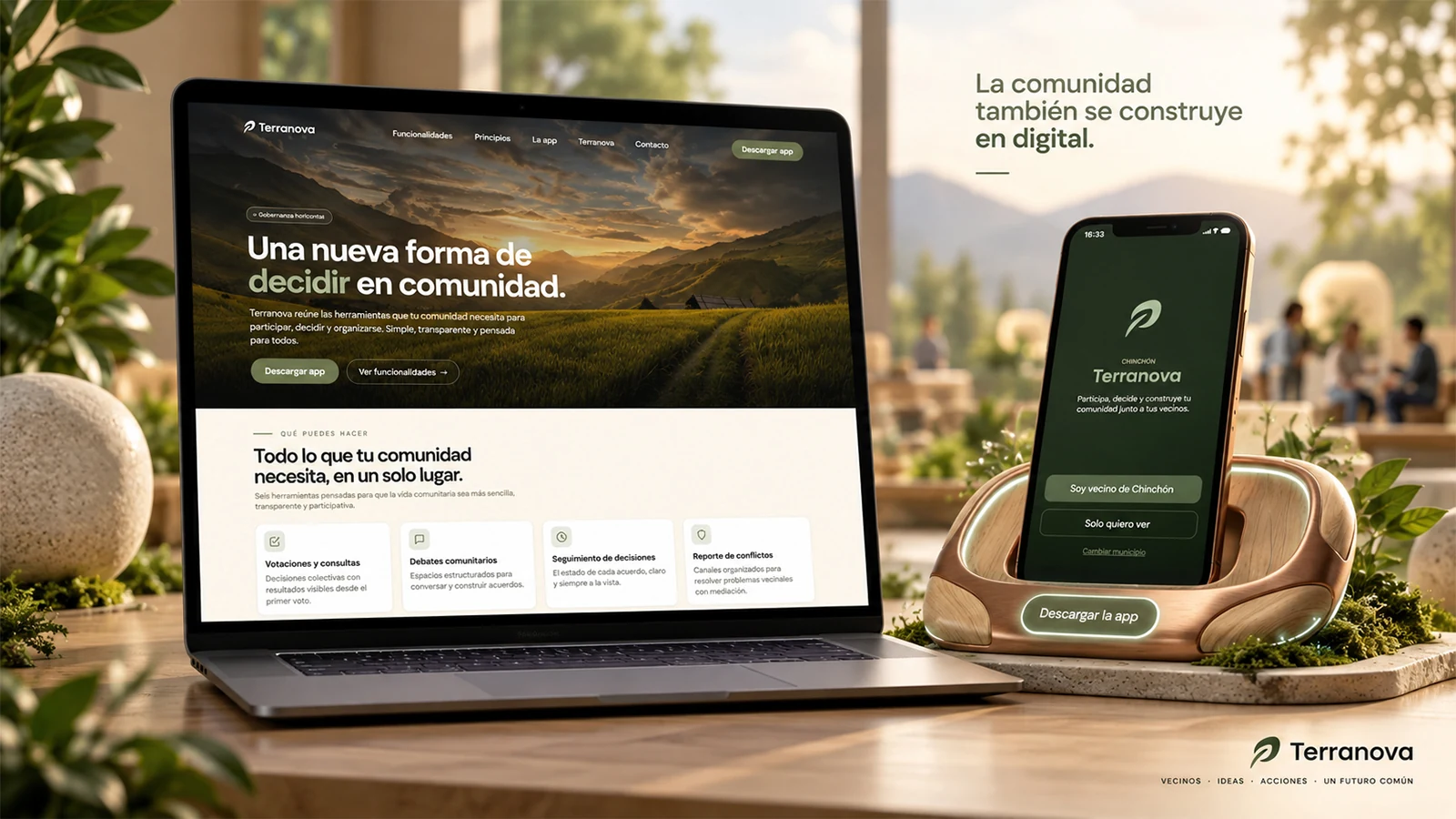
Terranova was developed as the Digital Rural Lab final project for the Master’s in UX/UI Design at Universidad Europea. It explores how digital tools can support rural communities in Spain without replacing their existing relationships or local identity. The challenge goes beyond access to information: people need to participate at the right time and understand what happens afterwards.
I combined desk research, an eight-question survey with 24 participants and a benchmark of Decide Madrid and GOV.UK. The survey, shared mainly through Facebook groups, explored participation, community decisions and conflict management in rural and semi-rural environments. This exploratory sample informed design priorities; it does not represent all rural residents.
In-person meetings exclude residents with limited time or mobility. The proposal brings voting and consultations to the phone and explores SMS as a complementary participation channel.
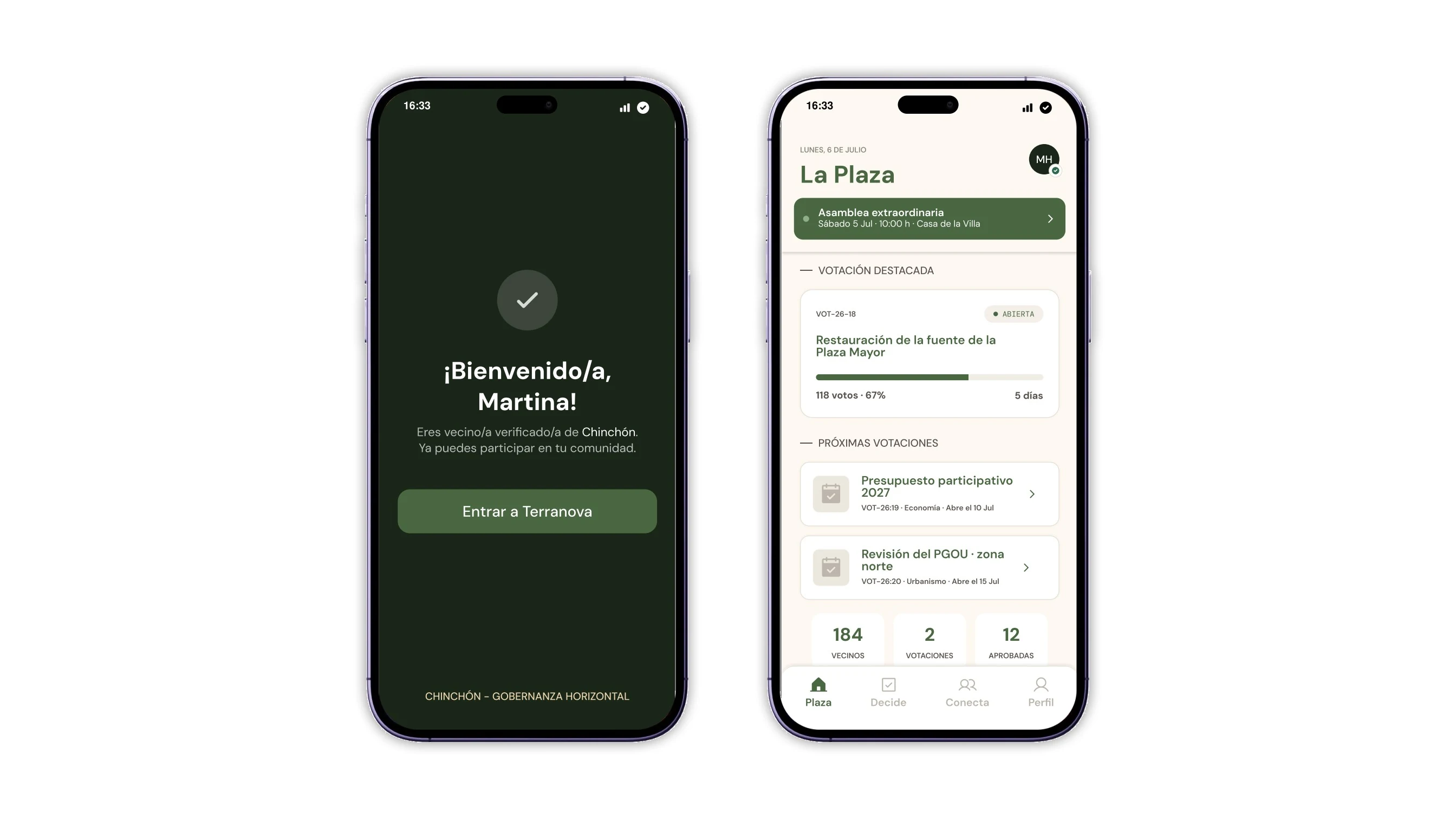
Scattered messages make decisions hard to follow. La Plaza brings together active votes, upcoming activities and recent community updates.
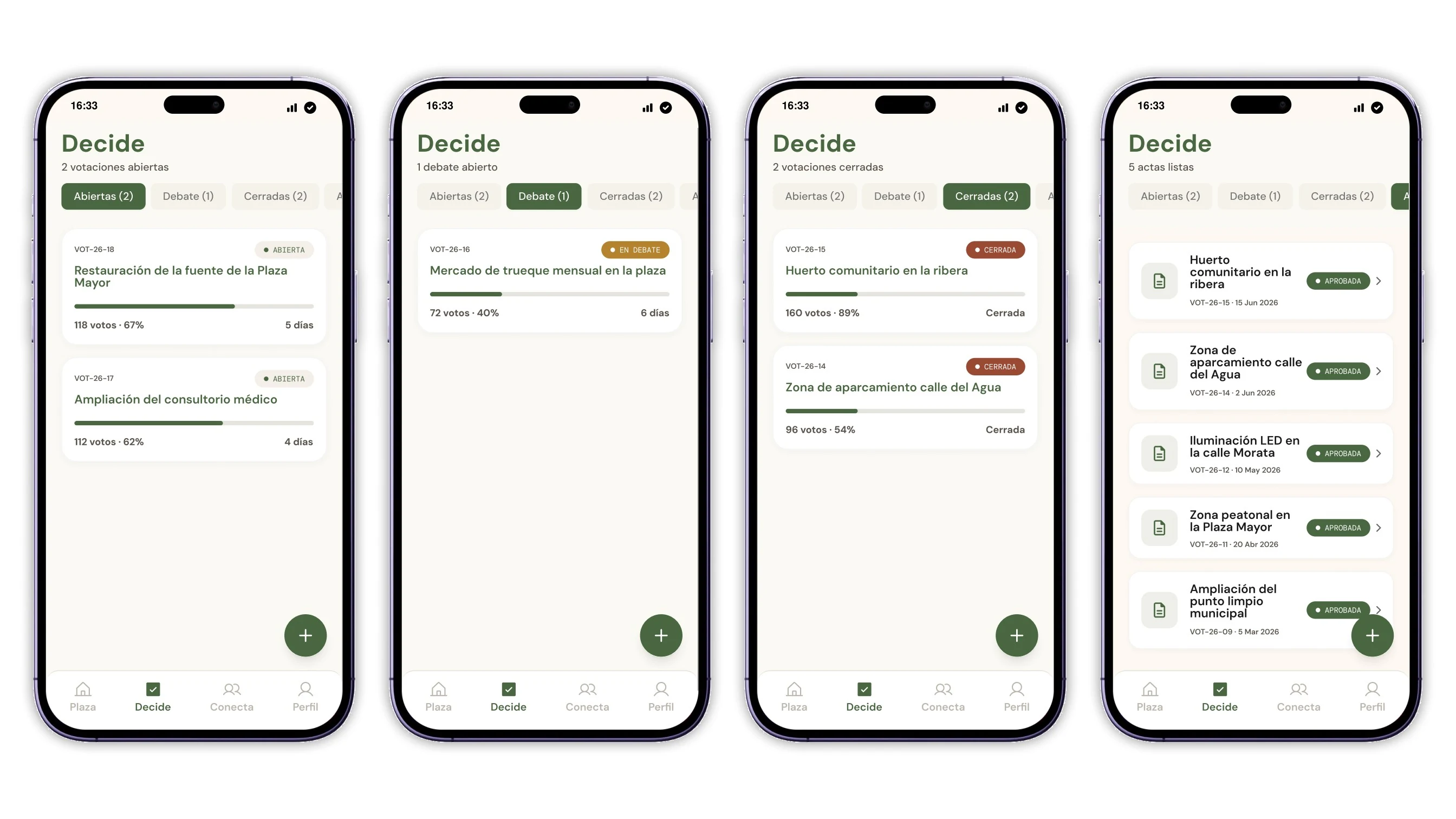
Participation needs a clear follow-up. Decide separates open votes, debates, closed votes and minutes so residents can see what was agreed.
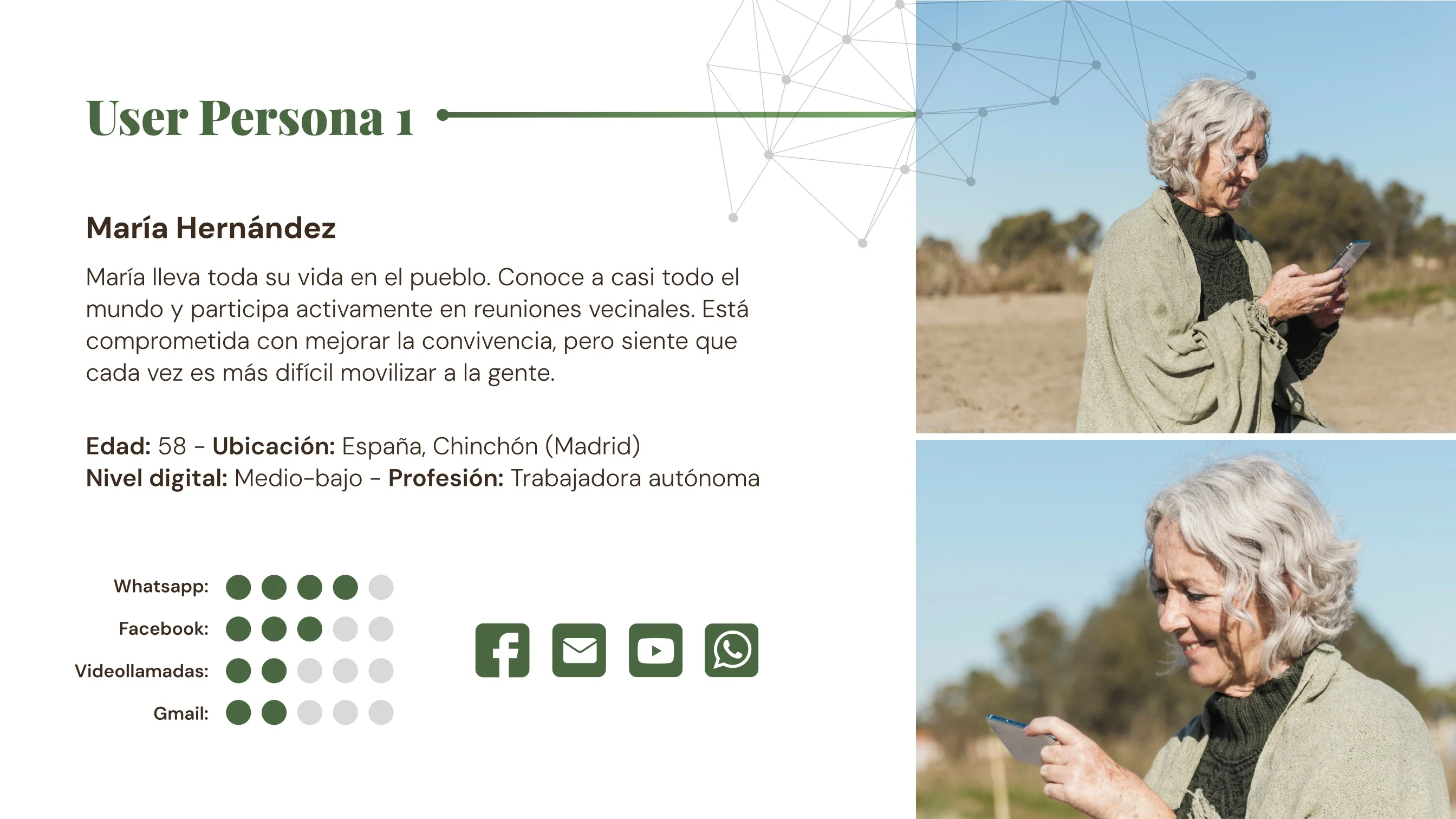
Two personas and their journeys highlighted the need for simple language, short tasks and clear feedback. The interface uses consistent patterns and touch targets of at least 48 px.
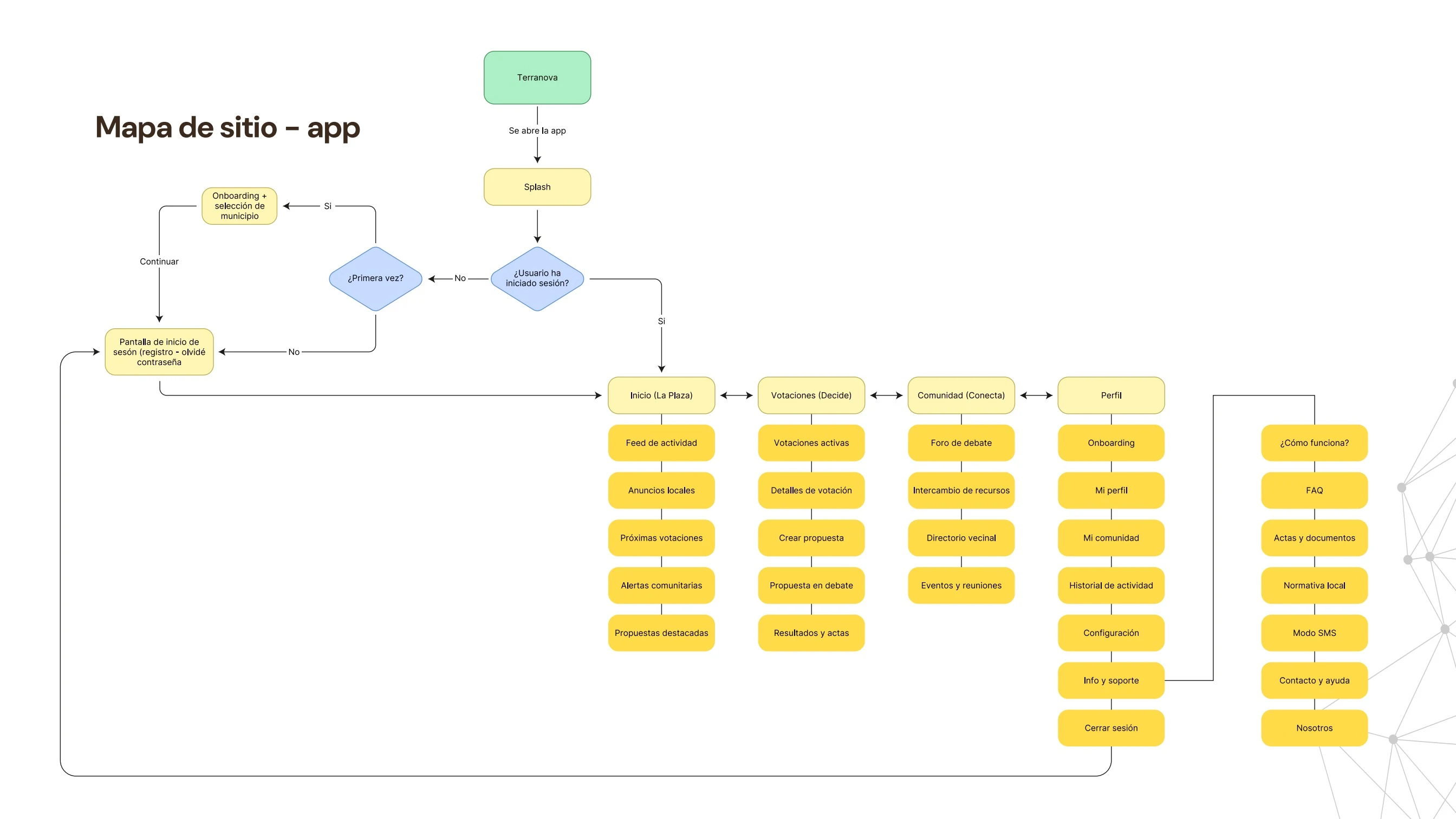
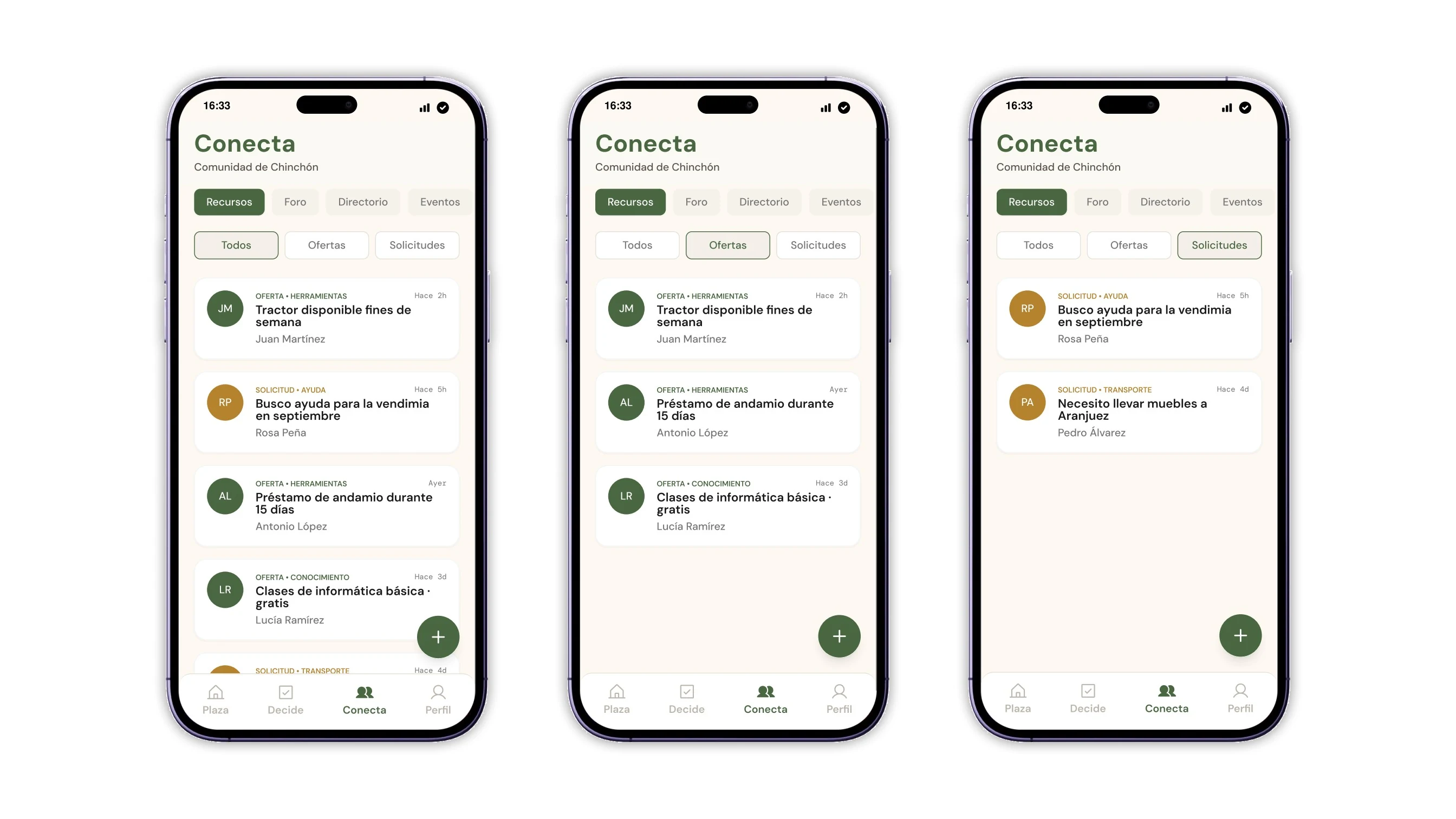
Four areas structure the app: La Plaza for an overview, Decide for votes and agreements, Conecta for resources, forums, a directory and events, and Profile for personal activity and settings. María’s persona prioritizes clarity and collective involvement; Antonio’s prioritizes fast, private participation that fits around work.
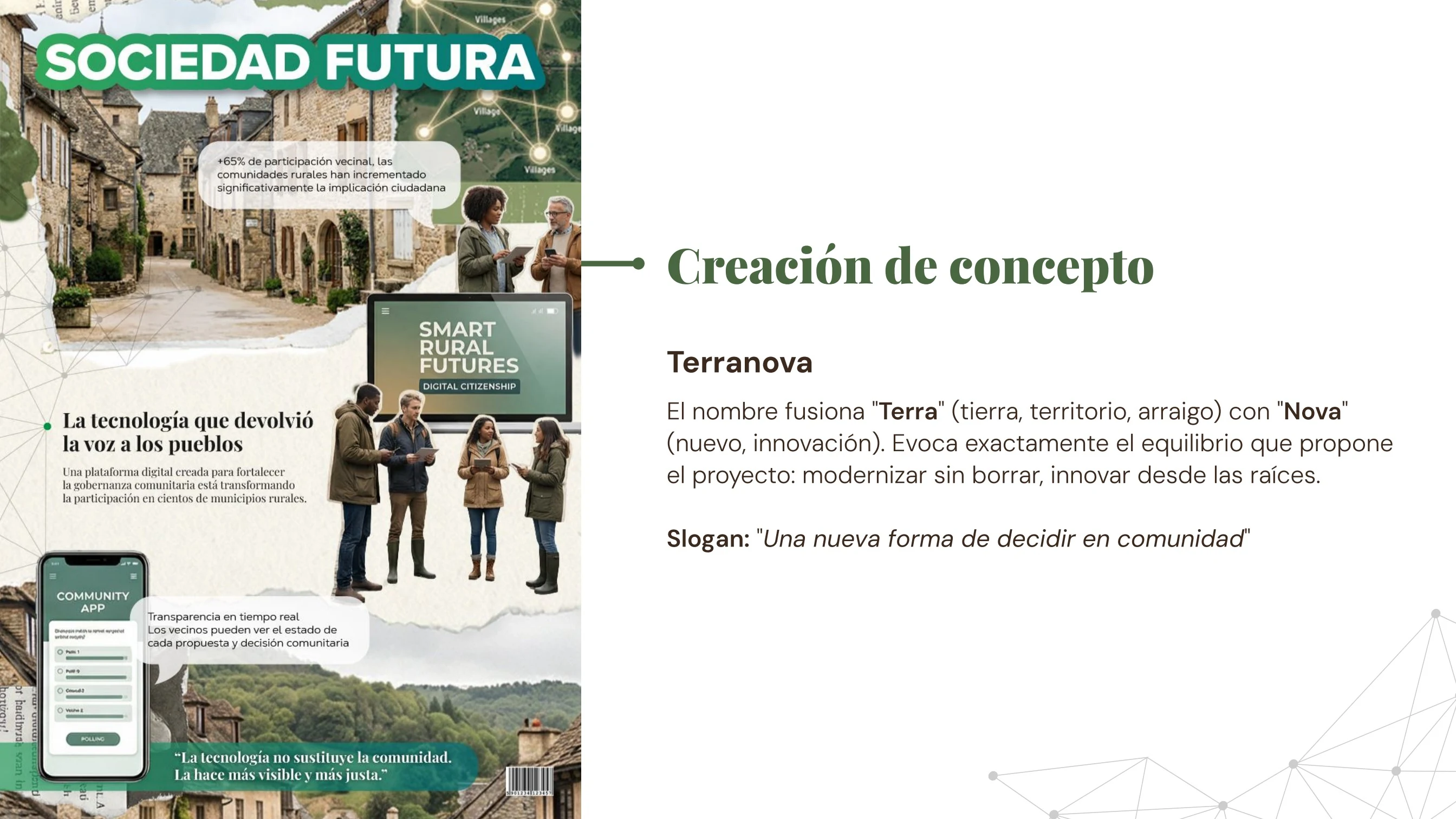
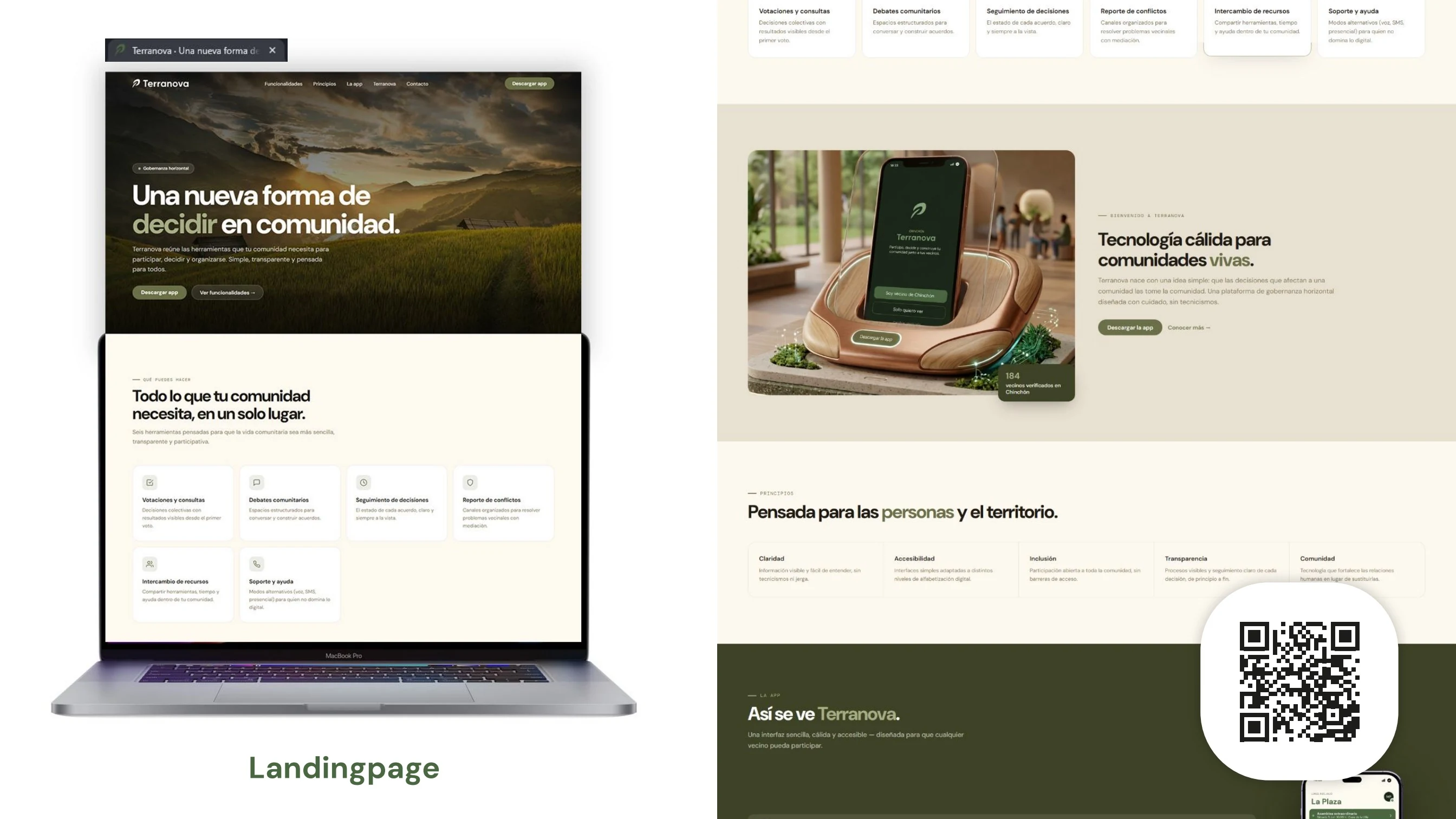
The name combines Terra—land and local roots—with Nova—renewal. The Terra design system translates this idea into earthy greens and browns, DM Sans and DM Mono typography, a 4 px spacing foundation and reusable components. Clarity, accessibility, consistency, inclusion and transparency guide the interface.
The project brings together research, personas, user journeys, information architecture, wireframes, brand identity, the Terra design system and a mobile prototype. The next steps are usability sessions with different digital skill levels, guided support and a community pilot. Identity verification remains a design area to develop.
The presentation also explores an adapted AARRR funnel. Its conversion figures and improvement targets are hypothetical planning scenarios, not measured product results.